In the realm of project management, two roles often come into focus: the Scrum Master and the Project Manager. Both roles are pivotal in steering projects to a successful completion. Yet, they differ significantly in their approach and responsibilities.
Understanding these differences is crucial for organizations and individuals alike. It helps in choosing the right role for specific project needs and career aspirations. In this article, we delve into the nuances of these two roles. We explore their responsibilities, leadership styles, and the skills required for each.
Whether you’re a project management professional or someone interested in Agile leadership, this comparative analysis will provide valuable insights.
Understanding the Scrum Framework
Before we delve into the roles, it’s essential to understand the Scrum framework. Scrum is a subset of Agile, a project management methodology that emphasizes flexibility, collaboration, and customer satisfaction.
Scrum, in particular, is a lightweight framework that helps teams work together. It encourages team members to learn through experience, self-organize while working on a problem, and reflect on their wins and losses to continuously improve.
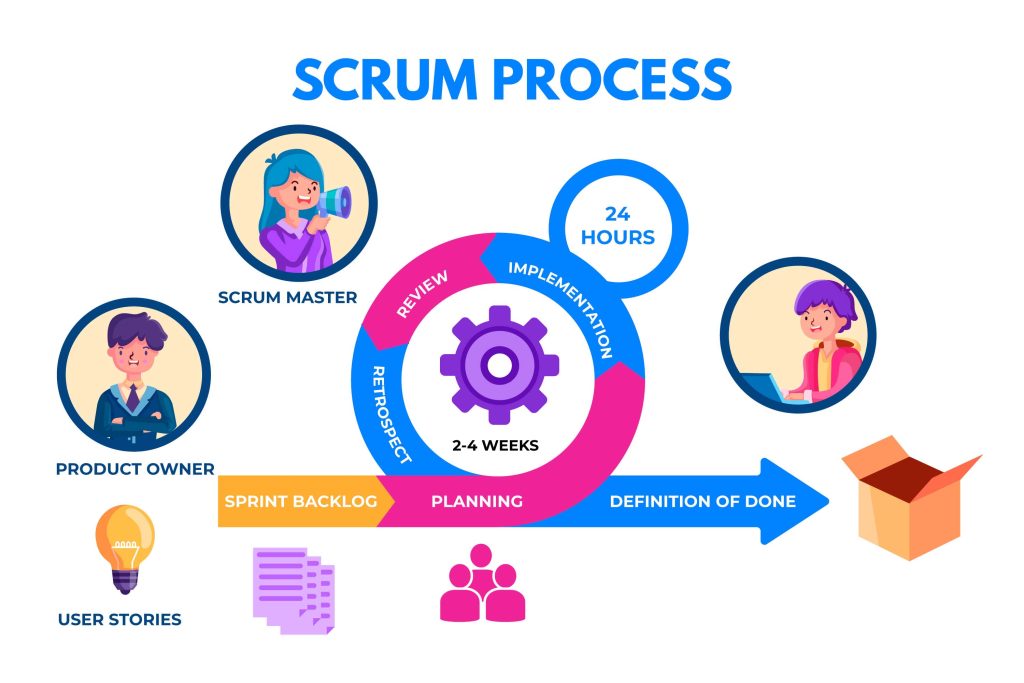
The Scrum framework is structured around several key elements, 3-5-3:
- 3 Roles: Scrum Master, Product Owner, and Development Team
- 5 Events: Sprint, Sprint Planning, Daily Scrum, Sprint Review, and Sprint Retrospective
- 3 Artifacts: Product Backlog, Sprint Backlog, and Increment
Understanding these elements is crucial to grasp the role of a Scrum Master. In the following section, we will explore this role in detail, shedding light on its responsibilities, skills, and impact on project success.
Defining the Scrum Master Role
The Scrum Master is a pivotal role within the Scrum framework. Unlike traditional project management roles, the Scrum Master does not manage the team but serves it. This role is often described as a servant-leader for the Scrum Team.
The Scrum Master’s primary responsibility is to ensure that the team adheres to Scrum theory, practices, and rules. They help everyone understand Scrum, both within the team and the organization. This involves coaching and guiding the team towards self-organization and cross-functionality.
Another key aspect of the Scrum Master’s role is to remove impediments that could obstruct the team’s progress. This could involve addressing internal team conflicts, tackling organizational barriers, or managing resources. The Scrum Master works to create an environment where the team can focus on the work at hand and perform at their best.
In essence, the Scrum Master is a facilitator and coach, fostering an environment of collaboration, productivity, and respect. They play a crucial role in promoting and supporting Scrum within the organization, ensuring that the team can work effectively within the Scrum framework.
Exploring the Project Manager Position
The Project Manager is a role deeply rooted in traditional project management methodologies. Unlike the Scrum Master, the Project Manager has a more directive role, overseeing the planning, execution, and closure of projects. They are responsible for delivering the project within the agreed scope, time, and budget constraints.
Project Managers are involved in defining the project scope, developing the project plan, and managing the project’s execution. They are responsible for coordinating all aspects of the project, including managing the project team, handling project risks, and ensuring that the project meets its objectives.
A significant part of the Project Manager’s role involves stakeholder management. They are the primary point of contact for all project-related communications, ensuring stakeholders are informed about the project’s progress and any issues that arise. They also manage the expectations of stakeholders, balancing their needs and interests with the project’s constraints.
In summary, the Project Manager is a leader and decision-maker responsible for delivering the project successfully. They play a critical role in managing the project’s constraints and ensuring that the project delivers value to its stakeholders.
Leadership Styles: Scrum Master vs Project Manager
The leadership styles of Scrum Masters and Project Managers differ significantly due to the nature of their roles. Scrum Masters embody a servant-leadership style, focusing on empowering the team and removing obstacles. They guide the team towards self-organization and foster a collaborative, transparent environment.
On the other hand, Project Managers often adopt a more directive leadership style. They are responsible for making key decisions, managing resources, and ensuring the project stays on track. Their role requires them to balance the needs of stakeholders, manage risks, and deliver the project within the defined scope, time, and budget.
In essence, while Scrum Masters facilitate and coach, Project Managers direct and control. Both roles are crucial in their respective contexts, and the effectiveness of their leadership styles depends largely on the project’s nature and the organization’s culture.
Key Responsibilities and Focus Areas
The Scrum Master and Project Manager roles have distinct responsibilities and focus areas, shaped by their respective frameworks.
Scrum Masters are primarily responsible for promoting and supporting Scrum. They do this by helping everyone understand Scrum theory, practices, rules, and values. Their key responsibilities include:
- Facilitating Scrum events as requested or needed.
- Assisting the team in creating high-value products.
- Removing obstacles that hinder the team’s progress.
- Coaching the team and organization in adopting Scrum.
- Ensuring that goals, scope, and product domain are understood by everyone on the Scrum Team.
Project Managers, in contrast, have a broader set of responsibilities. They oversee the entire project, from initiation to closure. They are responsible for defining the project scope, developing detailed project plans, and ensuring that the project is delivered on time, within scope, and within budget. They also manage risks, handle communication with stakeholders, and lead the project team.
Both roles require a strong set of project management skills, but their application varies based on the role’s focus and the project’s context. Scrum Master focuses on the elements of creating a high performance team and improves efficiency and it often means that the team would be accountable to many projects across time, instead of being disbanded once the project ends. On the other hand, Project Manager focuses on delivering projects till completion inclusive but not limited to financial planning, resource planning, scheduling and procurements. Oftentimes, a Project Manager will have different sets of team members for each project they work on.
Tools and Techniques: Agile vs Traditional Project Management
Scrum Masters and Project Managers use different tools and techniques, reflecting their distinct roles and methodologies. Scrum Masters, operating within the agile framework, often use tools like Jira, Trello, or Asana. These tools help manage backlogs, plan sprints, and track progress.
Project Managers, especially those in traditional project management, might use tools like Microsoft Project, Primavera, or Workfront. These tools assist in creating detailed project plans, managing resources, and tracking project timelines. They also help in risk management and stakeholder communication.
The choice of tools and techniques is influenced by the project’s nature, the organization’s culture, and the specific requirements of the role. While Scrum Masters focus on fostering collaboration and flexibility, Project Managers emphasize structure and control. Both roles, however, require a strong understanding of their respective tools to effectively manage projects and teams.
Communication and Team Interaction
Communication is a critical skill for both Scrum Masters and Project Managers. Scrum Masters facilitate communication within the team, between the team and the product owner, and with other Scrum teams. They ensure that everyone has a clear understanding of the project goals, the progress, and any impediments.
Project Managers, on the other hand, are responsible for communicating with a broader range of stakeholders. This includes the project team, senior management, clients, and other external stakeholders. They need to ensure that everyone is aligned with the project’s objectives, status, and any changes or risks.
Career Paths: Certifications and Progression
The career paths for Scrum Masters and Project Managers can vary significantly. Scrum Masters often start as team members in a Scrum team before taking on the Scrum Master role. They may progress to become Agile Coaches or even move into product ownership roles. Certifications such as Registered Scrum Master (RSM), Certified Scrum Master (CSM) and Professional Scrum Master (PSM) can enhance their career prospects.
Project Managers, on the other hand, often start in a project coordination or junior project management role. They can progress to senior project management roles, program management, or portfolio management. Certifications such as Project Management Professional (PMP), PRINCE2, and Certified Associate in Project Management (CAPM) are highly valued in this field.
- Scrum Master Certifications: Registered Scrum Master (RSM), Certified Scrum Master (CSM), Professional Scrum Master (PSM)
- Project Manager Certifications: Project Management Professional (PMP), PRINCE2, Certified Associate in Project Management (CAPM)
Both roles offer opportunities for continuous learning and professional development. The choice between the two often depends on personal interest, industry trends, and the specific needs of the organization.
Decision-Making and Authority
In the Scrum framework, the Scrum Master does not have the authority to make decisions on behalf of the team. Instead, they facilitate decision-making within the team, promoting self-organization and empowerment. This approach aligns with the principles of agile leadership, where the focus is on enabling the team to make informed decisions.
On the other hand, a Project Manager often has the authority to make key decisions related to the project. They are responsible for managing project scope, timelines, and resources. This role requires a balance of leadership and control to ensure project success within the defined constraints.
Scrum Master and Project Manager: Working Together
In organizations that use both Scrum and traditional project management, the Scrum Master and Project Manager can work together effectively. The Scrum Master focuses on the team and the agile practices, while the Project Manager oversees the project’s overall progress and stakeholder communication. This collaboration can lead to a balanced approach to project management, combining the benefits of agility and control.
However, it’s crucial to clearly define the roles and responsibilities to avoid confusion or conflict. Both roles should understand each other’s contributions and respect the unique value each brings to the project and the organization.
Conclusion: Choosing the Right Role for Your Organization
Choosing between a Scrum Master and a Project Manager depends on your organization’s needs, culture, and project types. Both roles offer unique value and can significantly contribute to project success. Understanding the differences and similarities between these roles can help you make an informed decision that best suits your organization’s objectives.
In summary, if you aim to enhance your professional journey, think about obtaining a Best Scrum Master Certification. The Registered Scrum Master program offered by CIAgile is an excellent choice. It is particularly beneficial for those leading high-performing teams. This certification equips you with the essential skills and knowledge to become a proficient Scrum Master, empowering you to boost productivity and achieve success in any agile setting. With knowledgeable instructors and a thorough curriculum, CIAgile guarantees that you will be well-prepared to thrive in your position. Sign up for the Registered Scrum Master course today and embark on your path to agile expertise with CIAgile.