Direct to garment printing is revolutionizing the world of custom apparel. This innovative technique allows for detailed designs directly on fabric. Unlike traditional methods, it offers flexibility and efficiency.
Small businesses and designers are embracing this technology. It eliminates the need for screens or stencils, making it ideal for intricate designs. The process is similar to using an inkjet printer, but for textiles.
DTG printing is perfect for print on demand services. It enables businesses to fulfill orders without holding inventory. This makes it a cost-effective solution for small orders.
The technology is environmentally friendly, using water-based inks and producing minimal waste. It’s a great choice for those looking to reduce their carbon footprint.
What is Direct to Garment Printing?
Direct to garment (DTG) printing is a modern fabric printing technology. It involves applying ink directly onto fabric. This is achieved using specialized inkjet printers designed for textiles.
DTG printing stands out due to its ability to produce high-quality images. The colors are vibrant and the detail is exceptional. This sets it apart from traditional t-shirt printing methods.
Here are some key features of DTG printing:
- Uses water-based inks absorbed by fabric
- Ideal for small orders and custom designs
- No setup fees like those in screen printing
DTG printers work best on cotton and cotton-blend garments. These fabrics absorb the ink well, resulting in vibrant prints. It’s a favorite for custom t-shirt printing.
The DTG Printing Process Step by Step
Direct to garment printing involves several key steps. Each step ensures the best quality output. The process is straightforward but requires precision.
First, the garment needs careful preparation. This crucial step ensures the design adheres well. After preparation, the design is printed directly onto the fabric.
Once printed, the ink must be cured. This step sets the ink and ensures longevity. Finally, the garment is inspected to ensure quality.
Here’s a simple breakdown of the DTG process:
- Preparing the garment
- Printing the design
- Curing the ink
- Quality check
This approach offers high-quality results and preserves the print’s vibrancy. DTG’s simplicity makes it accessible for many users. The process adapts well for small-scale and custom projects.
1. Preparing the Garment
Preparation is a vital first step in the DTG process. It involves treating the garment with a special solution. This pre-treatment helps the ink adhere better to the fabric fibers.
The pre-treatment ensures sharper, more vibrant designs. Without it, the ink might not bond well. The process typically involves spraying a pre-treatment liquid onto the fabric.
Common pre-treatment steps:
- Apply pre-treatment solution
- Evenly spread the solution
- Allow the garment to dry
2. Printing the Design
Printing is the heart of the DTG process. After preparing the fabric, the design is printed directly onto it. This uses a specialized inkjet printer for textiles.
These printers deposit ink precisely onto the garment. They ensure every detail of the design is captured. The water-based inks used are vibrant and eco-friendly.
Once printed, the garment goes through a quality check. This step ensures the design’s accuracy and vibrancy. It’s crucial for maintaining high standards.
3. Curing the Ink
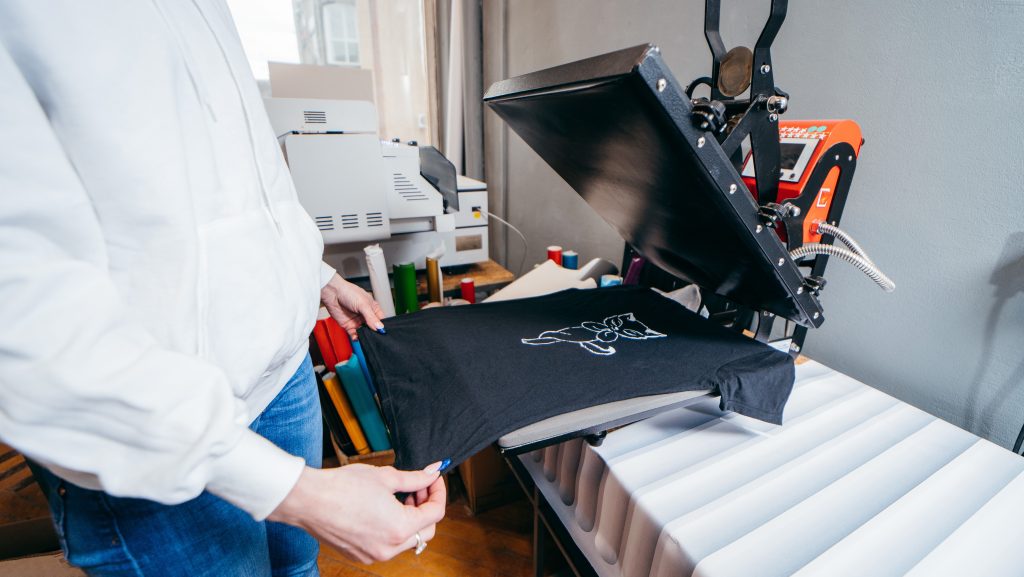
Curing is the final step in the DTG process. It sets the ink and solidifies the print’s longevity. This involves applying heat to the garment.
Heat presses or dryers are typically used. The ink cures and bonds fully with the fabric. Proper curing prevents the design from fading or washing out quickly.
This step is essential for durability and quality. Curing ensures the print withstands regular use and washing. Ensuring a professional finish requires careful attention to this step.
DTG vs. Other T-Shirt Printing Methods
Direct to garment printing offers unique advantages over traditional methods. Unlike screen printing, DTG doesn’t require stencils or screens. This saves time and allows for greater design flexibility.
Screen printing is often cost-effective for large orders but not for small runs. DTG excels in producing detailed, full-color designs without extra setup costs. This makes it ideal for limited edition and custom pieces.
Comparing DTG to heat transfer printing also reveals benefits. Heat transfer can produce vibrant colors but lacks the softness of DTG prints. DTG ink soaks into the fabric, preserving the garment’s feel.
Here’s how DTG stands out:
- No screens or stencils required
- Ideal for complex and detailed designs
- Cost-effective for small orders
- Soft, durable prints with a natural feel
DTG printing is adaptable and efficient, catering well to the modern demand for customization. It supports personalization in ways other methods may not, especially for small-scale needs.
Benefits of Direct to Garment Printing
Direct to garment printing offers numerous advantages for apparel customization. It allows for full-color designs without increased costs. This flexibility is perfect for unique and vibrant creations.
The DTG process is also eco-friendly. Using water-based inks minimizes environmental impact due to reduced chemical waste. This sustainable approach appeals to environmentally conscious consumers.
Additionally, DTG printing supports fast order fulfillment. It is ideal for on-demand services without inventory hassles. This is particularly beneficial for small businesses and start-ups looking to adapt quickly.
Key benefits include:
- Cost-effective full-color printing
- Environmentally friendly process
- Quick turnaround for print on demand services
These advantages make DTG a compelling choice in today’s dynamic retail landscape.
Limitations and Considerations
Direct to garment printing, while versatile, does have certain limitations. It’s not suited for mass production due to higher per-unit costs compared to screen printing. Additionally, its quality may vary with fabric types and colors.
Important considerations include:
- Not cost-effective for bulk orders
- Best results on cotton or cotton blends
- Pre-treatment required for vibrant prints
Understanding these factors helps ensure DTG is used effectively for your needs.
DTG Printing for Print on Demand and Custom Apparel
Direct to garment printing is a game-changer for the print on demand industry. Its flexibility allows businesses to produce custom apparel as orders come in, without needing large inventories. This approach reduces waste and storage costs.
DTG printing benefits custom apparel through:
- Customization with minimal setup
- Fulfillment of unique, small-batch orders
- Ability to print complex, full-color designs
These features make DTG printing ideal for personalized and creative garment customization.
Is DTG Printing Right for You?
Consider DTG if you need flexibility and detailed designs. It’s perfect for small orders and personalized items.
Evaluate your budget and volume needs. DTG is cost-effective for low to medium orders. For high-volume, screen printing might be more economical.