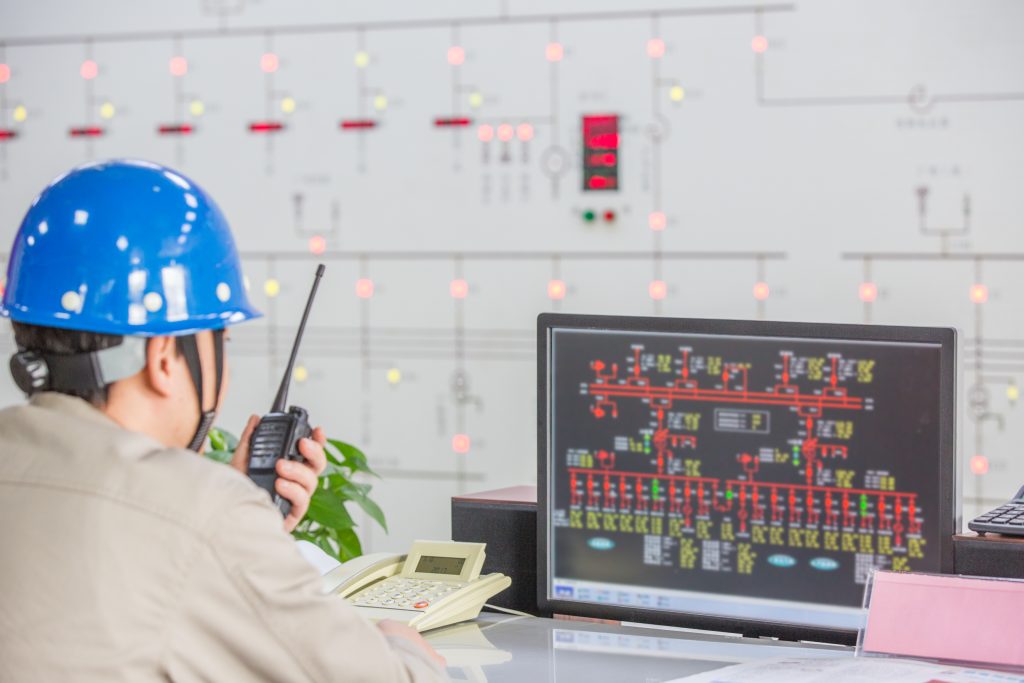
Critical power solution Malaysia protects your most sensitive equipment from the power quality issues that are common in Malaysia’s electrical grid — voltage sags, surges, spikes, harmonics, and complete outages. If your business relies on servers, medical equipment, telecoms, or industrial automation, a single power event without protection can cause data loss, equipment damage, or production downtime costing tens of thousands of ringgit. This beginner’s guide explains exactly what a critical power solution is, what it consists of, how to size it correctly, and how to choose the right solution for your site in Malaysia.
What Is a Critical Power Solution?
A critical power solution is an integrated electrical protection system that delivers clean, stable, uninterrupted power to equipment that cannot tolerate even a momentary power disruption. It combines a UPS (Uninterruptible Power Supply), AVR (Automatic Voltage Regulator), bypass switching, battery management, and power monitoring into a unified system that sits between the incoming mains supply and the protected load. According to Schneider Electric’s 2024 Data Centre Global Survey , unplanned power outages are the leading cause of data centre downtime globally, costing an average of USD 9,000 per minute for enterprise sites.
In Malaysia, TNB (Tenaga Nasional Berhad) supplies power at 240V/50Hz, but voltage fluctuations of ±10% are common — especially in industrial zones, older commercial buildings, and rural areas. A critical power solution from Right Power ensures that no matter what the incoming supply does, the protected equipment receives stable, clean 240V at 50Hz without interruption.
Why Is Critical Power Protection Important in Malaysia?
Malaysia experiences an average of 4 to 8 significant power quality events per site per year — including voltage sags caused by heavy industrial loads switching on nearby, transient spikes from lightning, and brief outages during TNB switching operations. Each event, even if it lasts only milliseconds, can corrupt data on a server, damage variable-frequency drives, or reset programmable logic controllers (PLCs) in a manufacturing line.
· Lightning strike frequency in Malaysia: among the highest globally at 120 to 180 thunderstorm days per year (Malaysian Meteorological Department, 2024)
· Average financial impact of unplanned server downtime in Malaysia: RM 15,000 to RM 85,000 per hour for mid-size businesses
· Equipment failure caused by power surges accounts for 25% of all IT hardware failures in Malaysian SMEs (MDEC, 2024)
· A hospital in Malaysia cannot legally operate life-support or surgical equipment without a verified critical power backup system
What Components Make Up a Critical Power Solution?
A complete critical power solution consists of five main components that work together to eliminate every category of power quality threat.
| Component | Function | Protects Against |
| UPS (Uninterruptible Power Supply) | Provides battery backup during outage | Complete power outages, micro-interruptions |
| AVR (Automatic Voltage Regulator) | Stabilises input voltage to ±1–2% | Voltage sags, surges, brownouts |
| Battery Cabinet / VRLA / Lithium | Energy storage for backup runtime | Runtime during outage (minutes to hours) |
| Bypass Panel / Static Switch | Routes power around UPS for maintenance | Allows servicing without downtime |
| SNMP / Monitoring Card | Remote monitoring, alerts, auto-shutdown | Proactive management, graceful shutdown |
What Are the Types of UPS Systems Available in Malaysia?
There are three UPS topologies — offline/standby, line-interactive, and online double-conversion — each offering a different level of protection and suited to different applications.
Offline / Standby UPS
The most basic and lowest-cost topology. The equipment runs directly from mains power; the UPS only engages when an outage is detected, switching to battery within 4 to 10 milliseconds. Suitable for home offices, POS terminals, and non-critical desktop equipment. Not recommended for servers or sensitive electronics.
Line-Interactive UPS
A line-interactive UPS includes a built-in AVR that continuously regulates voltage without switching to battery. Transfer time to battery is 2 to 4 milliseconds. This topology handles 85% of all power quality events (voltage sags and surges) without drawing on the battery, extending battery life significantly. Right Power’s line-interactive range is the most popular critical power solution for Malaysian SMEs, covering loads from 600VA to 10kVA.
Online Double-Conversion UPS
The highest protection topology. The load runs continuously from battery-derived power — the incoming mains never connects directly to the equipment. Transfer time is zero milliseconds. Suitable for data centres, hospitals, telecommunications, and all Tier 2 and above critical facilities. Right Power supplies online double-conversion UPS from 1kVA to 800kVA for Malaysian data centres and industrial sites.
How Do I Size a Critical Power Solution for My Site?
Correct sizing of a critical power solution prevents two common and costly mistakes: undersizing (UPS trips under load) and oversizing (poor efficiency at low loads). Follow this five-step process:
· List all equipment to be protected and note the wattage or VA rating from each nameplate or datasheet.
· Sum the total watts of all equipment. If only VA ratings are available, multiply by 0.8 to convert to watts.
· Add 25% headroom for future expansion: Total Load × 1.25 = Minimum UPS capacity.
· Determine required runtime — how many minutes of battery backup do you need? Longer runtime requires more battery capacity (larger battery cabinets or lithium battery upgrade).
· Select UPS topology — line-interactive for standard office/SME loads; online double-conversion for servers, data centres, and medical equipment.
Example: 3 servers drawing 400W each (1,200W total) × 1.25 = 1,500W minimum UPS capacity → select a 2kVA / 1,800W online UPS with extended battery module for 60-minute runtime. Right Power provides free critical power sizing consultations for Malaysian businesses — contact our team .
Where Is Critical Power Solution Used in Malaysia?
Critical power solutions in Malaysia are specified across six major sectors, each with distinct runtime, topology, and compliance requirements.
· Data centres and server rooms — online double-conversion UPS with N+1 redundancy, generator integration, and DCIM monitoring. Tier 3 Malaysian co-location facilities require 99.982% uptime.
· Healthcare and hospitals — Ministry of Health Malaysia mandates critical power backup for all life-support, surgical, and diagnostic equipment. Runtime of 4 to 8 hours minimum with generator changeover.
· Telecommunications — Malaysian Communications and Multimedia Commission (MCMC) requires battery backup for all base transceiver stations (BTS). Right Power supplies -48VDC rectifier systems for telco sites.
· Manufacturing and industrial — PLC, SCADA, CNC, and robotic systems require clean power. Voltage sags as brief as 16ms can reset a production line, causing scrap and re-start costs.
· Banking and financial services — ATMs, payment gateways, and core banking servers require online UPS with zero transfer time and minimum 30-minute battery runtime.
· Education — university data centres and e-learning infrastructure — especially critical post-2020 with Malaysia’s accelerated digital education investment.
Critical Power Solution Best Practices for Malaysian Sites
· Conduct a power quality audit before specifying — install a power analyser for 7 days to measure actual voltage sags, surges, harmonics, and frequency deviations on your site before selecting equipment.
· Never load a UPS above 80% continuously — operating above 80% load reduces battery life and increases thermal stress. Size to 80% maximum continuous load.
· Replace VRLA batteries at 3 years in Malaysia — ambient temperatures above 28°C accelerate battery degradation. Schedule replacement at 3 years rather than the nominal 5-year rating.
· Test battery discharge annually — conduct a controlled full discharge test once a year to verify actual runtime matches specification.
· Install a generator interlock if runtime exceeds 2 hours — battery systems cannot economically provide more than 2 hours runtime at reasonable cost. Pair with a diesel or natural gas generator for extended backup.
· Monitor remotely via SNMP — configure email and SMS alerts for low battery, overload, and bypass events. Unmonitored UPS units are the leading cause of undetected backup failure in Malaysian SMEs.
Key Takeaways
· A critical power solution combines UPS, AVR, battery, bypass, and monitoring to deliver clean, uninterrupted power to sensitive equipment.
· Malaysia experiences 4 to 8 significant power quality events per site per year — lightning frequency is among the highest globally at 120 to 180 thunderstorm days annually.
· Three UPS topologies exist: standby (basic), line-interactive (SME standard), and online double-conversion (data centre and medical grade).
· Correct UPS sizing = total load watts × 1.25 minimum. Never exceed 80% continuous loading.
· VRLA batteries in Malaysia should be replaced every 3 years due to ambient heat — not the nominal 5-year rating.
· Right Power supplies critical power solutions across Malaysia from 600VA to 800kVA for SMEs, data centres, hospitals, and industrial sites.
Frequently Asked Questions About Critical Power Solution Malaysia
What is a critical power solution?
A critical power solution is an integrated system — typically comprising a UPS, AVR, battery backup, and monitoring — that protects sensitive electrical equipment from power outages, voltage fluctuations, surges, and harmonics. It ensures continuous, clean power delivery to mission-critical loads regardless of grid conditions.
What is the difference between UPS and AVR?
A UPS provides battery backup during a complete power outage, keeping equipment running for minutes to hours. An AVR regulates voltage fluctuations continuously but does not provide battery backup. A complete critical power solution uses both — the AVR handles voltage issues and the UPS handles complete outages.
How do I size a UPS for my equipment in Malaysia?
Sum the wattage of all equipment to be protected, add 25% headroom, and select the next available UPS capacity above that figure. For example: 3 servers × 400W = 1,200W × 1.25 = 1,500W minimum → select a 2kVA UPS. Right Power provides free sizing consultation — contact us .
How long does a UPS battery last in Malaysia?
VRLA (sealed lead-acid) UPS batteries typically last 3 to 5 years at 25°C. In Malaysia’s climate, where ambient temperatures often reach 28 to 32°C in non-air-conditioned environments, expect 3 years before replacement. Lithium-ion UPS batteries last 8 to 10 years and are less temperature-sensitive.
What brands does Right Power supply in Malaysia?
Right Power manufactures its own UPS and AVR range and distributes APC by Schneider Electric, Eaton, Vertiv (Liebert), and Delta. Full critical power solution packages — from single-phase 1kVA office UPS to three-phase 800kVA data centre systems — are available. View Right Power’s full product range.