Why Malaysia Is a Global Hub for Custom Apparel Manufacturing
Malaysia has a well established textile and garment manufacturing industry with decades of experience producing apparel for international brands across Europe, North America, and Australia. The country offers skilled labour, strong fabric supply chains, and competitive production costs, making it an ideal location for custom apparel manufacturing for both small and large orders.
For Malaysian brands and businesses, sourcing custom t shirts locally also provides several advantages, including faster sampling and production, easier quality control, better communication, and shorter delivery times without relying on international shipping logistics.
Custom T-Shirt Printing Methods: A Technical Comparison
1. Silkscreen Printing
Silkscreen printing (screen printing) is the oldest and most widely used commercial t-shirt printing method in Malaysia. Ink is pushed through a mesh screen — one per colour — directly onto the fabric surface. The result is a durable, vibrant print with excellent wash fastness and a tactile ink feel that many brands prefer for its authenticity.
- Best for: designs with 1–6 colours, large quantity orders (50+ pieces), bold graphics, and spot colour corporate logos
- Not ideal for: photographic images with continuous tones, very small quantities (screen setup cost is fixed regardless of quantity), or designs with many colours
- Durability: 50+ washes when correctly cured. One of the most durable print methods available.
2. Heat Transfer / Heat-Press (DTF — Direct to Film)
Heat-press printing transfers a design from a carrier film to the garment using heat and pressure. Modern DTF (Direct to Film) technology allows full-colour photographic designs with smooth gradients to be applied to any fabric type — including performance fabrics and dark garments — without the colour limitations of traditional silkscreen.
- Best for: full-colour designs, small quantities, personalised items with variable names/numbers, and quick-turnaround jobs
- Durability: good when correctly applied, though typically lower than silkscreen for high-frequency wash use
- Advantage: no minimum order quantity constraint and rapid turnaround — ideal for event merchandise produced at short notice
3. Direct-to-Garment (DTG) Printing
DTG printing uses modified inkjet technology to print directly onto the fabric surface — essentially ‘printing’ the design onto the shirt in the same way a printer prints on paper. This allows photographic-quality full-colour prints with unlimited colour complexity.
- Best for: complex artwork, photographic designs, on-demand single-unit production, artist prints and premium streetwear collections
- Not ideal for: dark fabrics (requires white underbase which adds cost), very large orders (slower than silkscreen), or highly washed/abrasive use environments
- Durability: comparable to silkscreen when pre-treatment and curing are correctly performed
4. Embroidery
Embroidery uses thread stitched directly into the fabric to create a raised, textured design. It produces the premium corporate aesthetic associated with high-quality uniforms, polo shirts, and branded apparel for hospitality, finance, and healthcare sectors.
- Best for: corporate logos on collared shirts and polo tees, hospitality and healthcare uniforms, premium brand merchandise where perceived quality justifies cost
- Durability: the most durable decoration method — embroidery does not fade, crack, or peel regardless of wash frequency
- Limitation: not suitable for fine detail or photographic designs; thread count and stitch density limits achievable complexity
Choosing the Right Fabric for Your Custom T-Shirt
| Fabric | Feel | Best Use | Printing Suitability |
| 100% Cotton | Soft, breathable | Casual, streetwear, events | Silkscreen, DTG, DTF |
| Cotton/Polyester blend | Durable, less shrink | Corporate uniforms | All methods |
| 100% Polyester | Lightweight, moisture-wicking | Sports, activewear | Sublimation, DTF |
| CVC (Chief Value Cotton) | Soft & durable | Premium casual, brand merch | Silkscreen, DTG, DTF |
| Pique (Polo) | Structured, textured | Corporate polo, hospitality | Embroidery, DTF |
The Topstitch Production Process
- Product discussion — understanding your design, fabric preference, colour requirements, sizing, quantities, and intended use.
- Fabric cutting — precision cutting to pattern from selected fabric rolls, ensuring consistent sizing across the order.
- Add-on decoration — silkscreen printing, heat-press (DTF), DTG printing, or embroidery applied to specified positions.
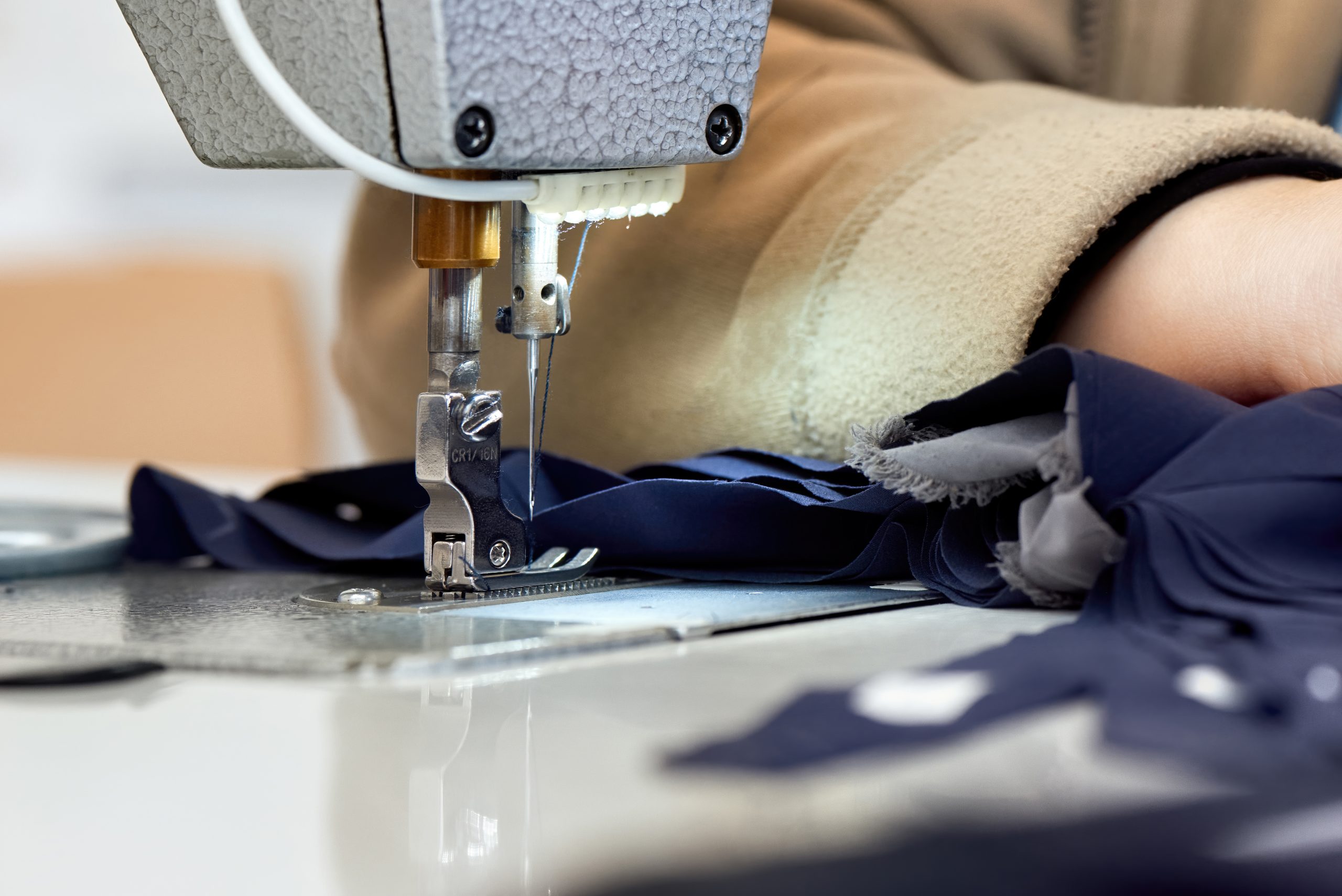
- Sewing — professional garment construction with consistent stitch tension, hem quality, and seam integrity.
- Ironing and quality check — individual garment inspection for print quality, sewing defects, and dimensional consistency.
- Packing and delivery — folded and packed to specification, with size and colour segregation for corporate or brand orders.
How to Start Your Custom T-Shirt Order with Topstitch
- Share your design files (vector AI, EPS, or high-resolution PNG), fabric preference, size breakdown, quantities, and delivery requirements
- Receive a detailed quotation including unit cost, setup fees if applicable, and production lead time
- Confirm order with deposit payment. For custom or new fabric colours, a physical sample is produced for approval before full production begins
- Full production commences. Standard custom orders are completed in 15–30 working days; special colours or fabrics may require 30–45 working days
- Completed order is packed and delivered to your specified address across Malaysia
FAQs: Custom T-Shirt Malaysia
1. What is the minimum order quantity?
Topstitch supports relatively low minimum order quantities suitable for brand founders and small businesses, while also accommodating large corporate orders. Exact MOQs depend on the production method, fabric, and customisation complexity — contact Topstitch directly for a consultation based on your specific requirements.
2. Can I provide my own design files?
Yes — vector files (Adobe Illustrator .AI or .EPS) are preferred for silkscreen printing to ensure clean colour separation at any output size. For DTG and DTF, high-resolution PNG files (minimum 300 DPI at print size) are accepted. Topstitch’s design consultants can advise on file preparation if needed.
3. Do you offer private label branding?
Yes. Topstitch provides complete private label services including custom woven labels with your brand name and care instructions, hang tags, custom packaging, and barcode labelling for retail-ready garments. This is suitable for brands launching collections for retail, e-commerce, or wholesale distribution.
Final Word
Malaysia’s custom t-shirt market offers a wide range of production options at varying quality levels. For brands, businesses, and organisations that cannot afford to compromise on print quality, fabric standard, or production consistency, Topstitch provides the combination of manufacturing expertise, material quality, and consultative service that produces results you are proud to wear and distribute.