Anti climb fence Malaysia installations have grown significantly over the past five years as industrial facilities, data centres, substations, and high-security commercial sites prioritise perimeter security. However, poor specification — wrong mesh size, inadequate post embedment, missing anti-climb toppers — results in fencing that looks secure but can be scaled in under 60 seconds. This 2026 expert guide covers the best practices for specifying, procuring, and installing anti climb fence in Malaysia so your perimeter delivers genuine security, not just the appearance of it.
What Is Anti Climb Fence?
An anti climb fence is a welded mesh security barrier engineered specifically to prevent intruders from climbing the perimeter by eliminating all possible hand and footholds. The defining characteristic is the mesh aperture size — typically 12.5mm × 75mm (often called “358 mesh” because the measurements are approximately 3 inches × 0.5 inches × 8 gauge wire). This aperture is too small for a finger or toe to grip, making climbing nearly impossible without specialised equipment. According to the Loss Prevention Standard (LPS 1175) published by the Loss Prevention Certification Board , 358 mesh panels rated SR1 to SR3 delay a determined attacker by 1 to 5 minutes — compared to 15 to 30 seconds for standard chain link or BRC fencing.
In Malaysia, anti climb fence is specified by WC Engineering for substations (TNB and independent power producers), data centres, logistics hubs, water treatment facilities, military installations, and premium residential perimeter security. The Malaysian market predominantly uses hot-dip galvanised 358 mesh with PVC green coating for tropical climate resistance.
Why Standard Fencing Fails as a Security Barrier
Standard chain link fence and BRC (British Reinforced Concrete) welded mesh fence are not anti-climb products — they are boundary markers that a determined intruder can scale in under 30 seconds. Chain link fence uses 50mm diamond apertures that accommodate a full boot toe and offer two-handed grip. Standard BRC fence uses 50mm × 100mm apertures — similarly climbable. A security professional can scale a 1.8m BRC fence in approximately 12 seconds.
The 2024 PDRM (Royal Malaysia Police) statistics on commercial break-ins found that 67% of intrusions occurred at sites where perimeter fencing was chain link or standard welded mesh. Only 8% of break-ins occurred at sites with 358 security mesh or equivalent anti-climb fencing installed. The security gap is clear and quantifiable.
Types of Anti Climb Fence Available in Malaysia
There are four primary anti climb fence systems available for Malaysian projects — each suited to different security levels, budgets, and aesthetic requirements.
358 Security Mesh (V-Mesh / Prison Mesh)
The market standard for high-security anti climb fence in Malaysia. 4mm or 5mm wire diameter, 12.5mm × 75mm aperture, welded at every intersection and pressed into rigid panels with horizontal strengthening ribs. The ribs add stiffness that resists panel deflection even when subjected to a climbing load. Standard panel sizes: 2.4m × 3.0m. Available hot-dip galvanised only, galvanised + PVC coated (green, black, or custom RAL colour).
Palisade Security Fence
Vertical steel pales with W-section or D-section profile, spear-pointed or triple-point tops. Provides a highly visible deterrent. Climbing is not eliminated (the vertical pales can be gripped) but the spear tops create a significant injury deterrent. Commonly used for government buildings, police stations, and heritage sites where appearance matters. Not a true anti-climb solution but rated to LPS 1175 SR2 in heavier-gauge versions.
Betafence Securifor 3D
A premium European anti-climb welded mesh system imported by WC Engineering. Uses a 3D profile (panels are pressed into a curved corrugated form) that adds rigidity far exceeding standard flat panels. Available in 50mm × 200mm aperture (not as secure as 358 mesh but offers a better view-through for surveillance). Popular for data centre external perimeters where CCTV visibility through the fence is important.
Razor Wire / Barbed Tape Topping
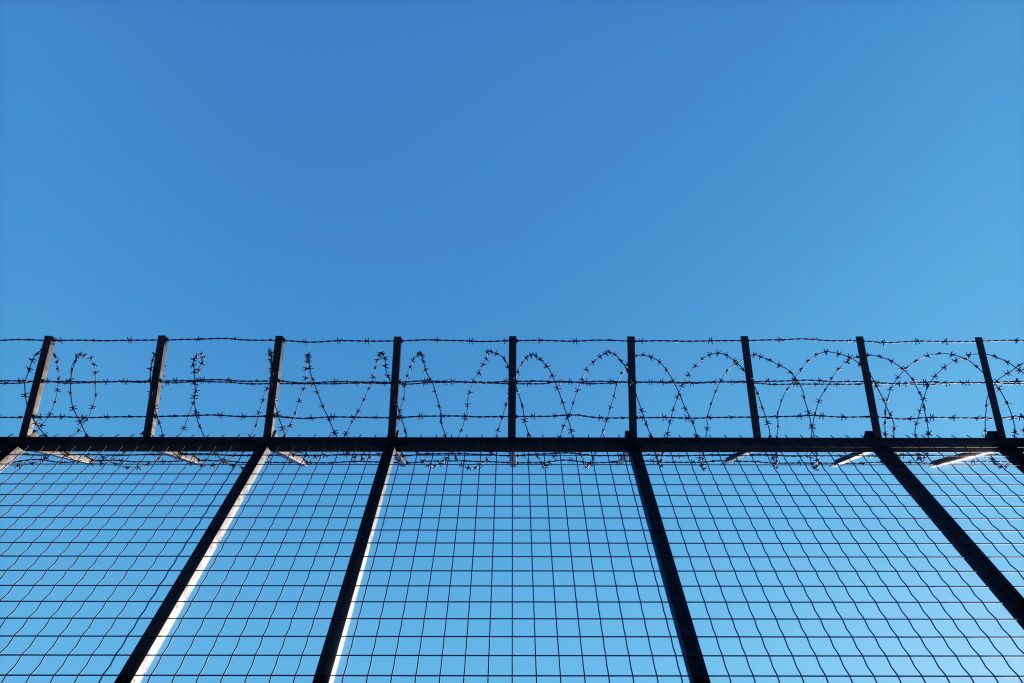
Not a standalone anti-climb fence, but a critical topping system added to 358 mesh or palisade fence to complete the anti-climb deterrent. Concertina razor wire (450mm diameter coil) or flat barbed tape adds 300mm to 600mm of effective height and creates a significant injury deterrent. Flat barbed tape is preferred for facilities visible to the public (less aggressive appearance). Concertina coil is specified for maximum security (substations, military, corrections).
Anti Climb Fence Comparison Table — Malaysia 2026
| Type | Mesh Aperture | Anti-Climb Rating | Climb Time | Best For | Typical Cost (RM/m run) |
| 358 Security Mesh (galv + PVC) | 12.5×75mm | LPS SR2–SR3 | 3–5 min | Substations, data centres, industry | RM 180–280 |
| Palisade (D-section, triple point) | N/A — vertical pale | LPS SR1–SR2 | 45–90 sec | Government, police, heritage | RM 220–350 |
| Betafence Securifor 3D | 50×200mm (3D) | LPS SR1 | 60 sec | Commercial perimeter, surveillance | RM 260–380 |
| BRC Welded Mesh (standard) | 50×100mm | Not rated | 12–15 sec | Boundary demarcation only | RM 80–130 |
| Chain Link Fence | 50mm diamond | Not rated | 10–12 sec | Temporary sites, agricultural | RM 50–90 |
Best Practices for Anti Climb Fence Installation in Malaysia
Correct installation determines whether your anti climb fence actually delivers its rated security level — or merely looks like it does. WC Engineering’s installation team follows these non-negotiable best practices on every project:
1. Post Embedment Depth
Anti climb fence posts must be embedded to a minimum of one-third of the overall post height in concrete. For a 2.4m panel, posts are typically 3.0m long — 600mm embedment minimum in standard Malaysian subsoil conditions. Coastal and clay-heavy sites require 750mm embedment with a wider concrete footing (300mm diameter minimum) to resist lateral loading from climbing attempts or high wind.
2. Panel-to-Post Fixings
Use anti-tamper fixings (clutch-head bolts or one-way screws) throughout. Standard hex-head bolts can be removed with a RM 15 spanner from any hardware store. Anti-tamper clutch-head fixings require a special tool to remove. Every 358 mesh perimeter installed by WC Engineering uses anti-tamper fixings as standard — no exceptions.
3. Gate Security Must Match Fence Security
The most common security failure on anti climb fence perimeters in Malaysia is a high-security mesh panel adjacent to a lightweight automated gate that can be forced in seconds. Gates must be specified to match or exceed the fence security rating: steel cantilever swing gates with anti-lift hinges, anti-dig bars at the base, and slam locks rather than padlocks. A padlock is the weakest point on any perimeter — replace with integral bolt locks.
4. Anti-Climb Topping Selection
Select topping based on visibility, legal risk, and security level. Concertina razor wire (maximum security) is the most effective deterrent but creates liability risk if a trespasser is injured — ensure your public liability insurance covers the specification used. Flat barbed tape is preferred for public-facing perimeters. Rotating anti-climb devices (spinning tubes over the top rail) are a legal alternative with no injury risk and are increasingly specified for Malaysian commercial sites.
5. Post-Installation Inspection Protocol
Inspect the completed perimeter using a formal checklist: post plumb (±3mm), panel gap to ground (max 50mm), fixing tightness (torque-tested), topping continuity (no gaps), gate alignment and lock function. WC Engineering provides a signed inspection certificate with every completed perimeter installation.
Height and Topping Requirements by Site Type in Malaysia
| Site Type | Minimum Fence Height | Topping Required | Standard / Reference |
| TNB Substation (11kV–33kV) | 2.4m | 500mm barbed wire / razor tape | TNB Technical Guidelines |
| Industrial Factory / Warehouse | 2.1m | Recommended — 300mm barbed tape | DOSH Malaysia Guidelines |
| Data Centre Perimeter | 2.4m | 500mm concertina or rotating anti-climb | TIA-942 / ISO 27001 site security |
| Water Treatment Plant (SAJ, SYABAS) | 2.4m | 500mm razor wire | Water Supply Authority requirements |
| High-Security Commercial | 2.1m | 300mm flat barbed tape | Insurance requirement / client spec |
| Residential Perimeter (Premium) | 1.8m–2.1m | Rotating anti-climb or flat barbed tape | Developer / local authority approval |
Where Anti Climb Fence Is Used in Malaysia
· TNB and IPP substations — mandatory 2.4m fencing with topping per TNB Technical Guidelines. WC Engineering has installed perimeter fencing for 30+ substations across Peninsular Malaysia.
· Data centres and server farms — Cyberjaya, Nusajaya Tech Park, and regional data centre campuses specify 358 mesh with CCTV-compatible topping and vehicle anti-ram bollards at gate entries.
· Oil and gas facilities — Kerteh, Gebeng, and Bintulu petrochemical complexes require LPS 1175 rated perimeter fencing with full access control integration.
· Logistics and bonded warehouses — Penang Free Trade Zone, KLIA Aeropolis, and Port Klang Free Zone bond stores require perimeter security meeting customs and Royal Malaysian Customs requirements.
· Military and government — MINDEF facilities, PDRM compounds, immigration detention centres, and court complexes across Malaysia.
· Premium residential and gated communities — anti climb fence replaces BRC at high-end landed property developments in Damansara, Sri Damansara, Kenny Hills, and Penang Hill.
Key Takeaways
· Anti climb fence Malaysia uses 12.5mm × 75mm (358) mesh aperture — too small for fingers or toes, making it effectively un-climbable without specialised equipment.
· Standard BRC and chain link fencing is not anti-climb — a determined intruder can scale it in 10 to 15 seconds.
· 358 security mesh rated LPS SR2–SR3 delays a skilled attacker by 3 to 5 minutes — enough time for security response.
· Post embedment (minimum one-third of post length in concrete), anti-tamper fixings, and gate security matching fence security are the three most critical installation factors.
· TNB substations require 2.4m minimum height; data centres and water treatment plants specify 2.4m with 500mm topping.
· WC Engineering supplies and installs anti climb fence across Peninsular Malaysia — substations, industrial, data centre, logistics, and high-security commercial.
Frequently Asked Questions — Anti Climb Fence Malaysia
What is anti climb fence?
An anti climb fence is a welded mesh security barrier with very small 12.5mm × 75mm apertures (358 mesh) that provide no foothold or grip for climbing. Combined with rigid panel construction, anti-tamper fixings, and razor wire or rotating topping, it forms a perimeter barrier that delays a determined intruder by 3 to 5 minutes versus 10 to 15 seconds for standard BRC fencing.
What height of anti climb fence is required in Malaysia?
Commercial and industrial sites typically install 2.1m to 2.4m panels. TNB substations require a minimum 2.4m per TNB Technical Guidelines. High-security sites (data centres, water treatment, oil and gas) specify 2.4m panels plus 500mm anti-climb topping for a total effective height of 2.9m. Local authority approval may be required for heights above 3.0m.
What is the difference between BRC fence and anti climb fence?
BRC fence uses large 50mm × 100mm apertures — climbable in 12 seconds. Anti climb fence (358 mesh) uses 12.5mm × 75mm apertures with no climbable footholds and rigid reinforced panels. Anti climb fence costs approximately RM 180 to 280 per linear metre versus RM 80 to 130 for BRC, but provides a fundamentally different level of perimeter security.
Does WC Engineering supply anti climb fence across Malaysia?
Yes — WC Engineering supplies and installs anti climb fence throughout Peninsular Malaysia, covering Selangor, Kuala Lumpur, Johor, Penang, Perak, Pahang, Negeri Sembilan, and Kedah. We supply 358 security mesh, Betafence Securifor, palisade, and custom security fencing for substations, industrial, data centre, logistics, and government sites. Request a quotation.
How long does anti climb fence last in Malaysia?
Hot-dip galvanised 358 mesh panels last 20 to 30 years in Malaysia’s tropical climate. PVC-coated panels in polyester-based coatings add a further 10-year aesthetic life. Annual inspection of post footings and fixing re-tightening every 3 to 5 years maintains structural integrity. WC Engineering offers maintenance contracts for installed perimeter systems.