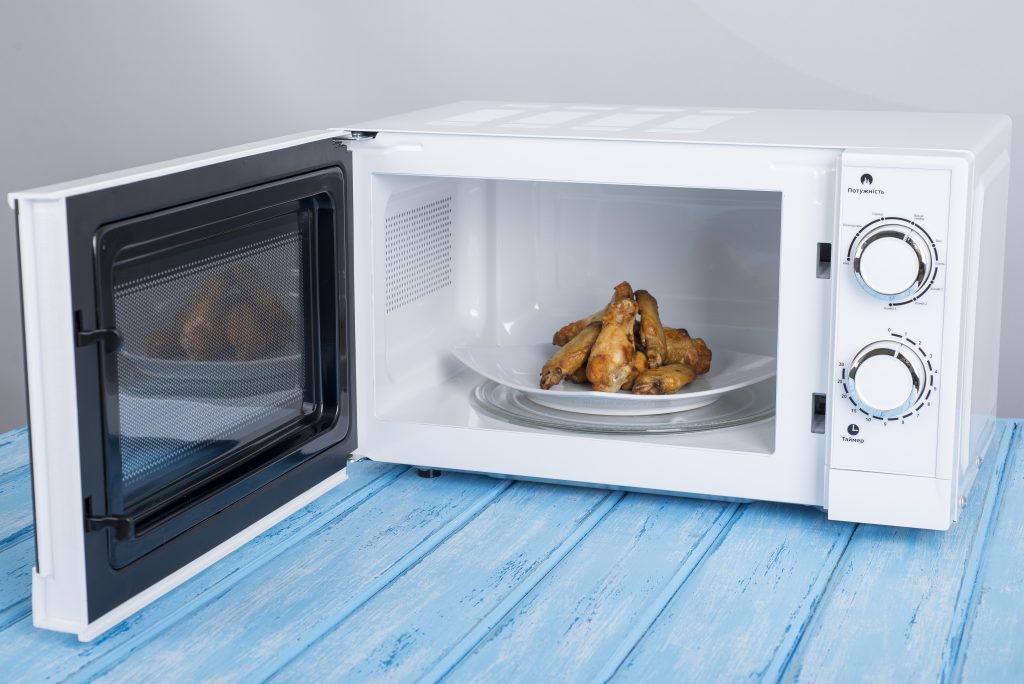
The microwave oven and the conventional oven are the two culinary powerhouses vying for dominion in the modern kitchen, altering the way we cook and redefining our culinary experiences. These kitchen appliances have developed into indispensable partners, each providing distinctive cooking techniques that satisfy various dietary needs and time restraints. Although both ovens strive to provide excellent meals, they use very different technologies to accomplish this. In this article, we set out to discover the differences between the microwave oven and the conventional oven by investigating their heating techniques, cooking rates, cooking outcomes, and the kinds of cookware they favor.
Heating technique:
Food is heated and cooked in a microwave oven using electromagnetic waves with a microwave frequency. These waves cause heat to be produced, which cooks the meal from the inside out by exciting water molecules and other polar molecules in the food. The microwaves consist of electromagnetic radiation, specifically radio waves with a frequency of around 2.45 gigahertz. The fact that water molecules, fats, and some other polar molecules present in food absorb these waves gives them a special quality. As the microwaves pass through the food, they cause the water molecules to vibrate rapidly.
The molecular friction generated by this vibration generates heat. As a result, the food is heated from the inside out, as the water molecules distribute heat throughout the entire item. This is why microwaving can be significantly faster than conventional cooking methods, where heat is transferred from the outside of the food and gradually penetrates the interior.
It’s important to note that the microwaves used in microwave ovens are non-ionizing, meaning they do not change the molecular structure of the food or make it radioactive.
Radiant heat from a conventional oven is produced using a heating element, which is normally found at the top or bottom of the oven. The food is cooked by being surrounded by hot air as the heat is distributed throughout the confined space of the oven. The hot air circulates around the food, and as the food’s surface temperature increases, the heat gradually penetrates the interior. This process is known as convection, and it’s the reason why conventional ovens are excellent for baking and roasting. Convection ovens, which have a fan for better air circulation, further improve cooking performance and evenness.
The heat in a conventional oven can be adjusted by setting the temperature, which allows for precise control over the cooking process. However, conventional ovens generally take longer to cook compared to microwaves due to the slower and more indirect heating process.
Cooking rate
Due to the rapid heating process, a microwave oven cooks food significantly more quickly than a normal oven. After the microwaves have penetrated the food, it practically immediately starts to cook. As soon as the microwave is turned on, it starts penetrating the food and generating heat at the molecular level. This results in food getting cooked much faster compared to conventional ovens, which rely on slower heat transfer from the outside to the inside of the food.
Compared to a microwave, a conventional oven often requires more time to cook food since it relies on heat being transferred from the air to the food’s surface and then gradually through the inside. The cooking time in a conventional oven depends on several factors, including the oven’s temperature, the size and thickness of the food item, and the cooking method being used. Baking, roasting, and other conventional cooking techniques typically require longer cooking times compared to microwaving.
While conventional ovens provide excellent results in terms of browning, caramelization, and texture development, they may not be the most time-efficient option for quick meals or when you need to warm up food rapidly.
Cooking results:
Microwave oven:
Microwave cooking is well-suited for certain tasks but may not deliver the same results as conventional ovens in certain aspects. Since microwaves cook food from the inside out by exciting water molecules, they are excellent for maintaining the moisture content of the food. This is especially advantageous when cooking vegetables and certain meats, as they tend to retain more of their natural juiciness.
Conventional Oven:
Many chefs and home cooks favor conventional ovens because they are incredibly versatile and capable of producing a wide range of cooking results. Some of the advantages of cooking with a conventional oven include Browning and Caramelization, crisping, and Versatility. The results are noticeable when it comes to colors, textures, and flavors, and when it comes to crisping, the oven has much better air circulation than the microwave, resulting in a broader spectrum of cooking methods.
Types of cookware:
Microwave Oven:
When using a microwave oven, it is essential to use microwave-safe cookware. Microwaves work by exciting water molecules and certain polar molecules in the food, and they can also interact with materials in cookware. To ensure safe and effective cooking in a microwave, use containers made of materials that do not absorb microwaves or leach harmful substances into the food. These include glass, ceramic, microwave-safe plastics, and parchment paper.
Conventional Oven:
There are no material limits, so a variety of cookware can be used, including glass, metal, ceramic, and some forms of plastic. In a conventional oven, the restrictions on cookware materials are not as stringent. Conventional ovens can safely use a wide variety of cookware, including metal, glass, ceramic, silicone, and stoneware. However, there are some materials that should be avoided in a conventional oven, such as certain plastics that are not oven-safe or cookware with plastic handles that may not be able to withstand high oven temperatures.
Verdict
In conclusion, because of their speed and convenience, microwave ovens are well suited for quick cooking and reheating operations. Conversely, conventional ovens are necessary for baking and roasting applications because they provide more cooking possibilities and deliver distinctive outcomes. The decision between the two appliances depends on the user’s particular cooking requirements and preferences. Each appliance has its own distinct advantages. It is advantageous for many houses to have both types of ovens so that they can take advantage of each.
Which Microwave Oven should I choose then?
Hargapedia, the best price comparison site, provided the latest microwave oven models from in demand brands in Malaysia. For example, you can get the best-selling model MM720CXM 20-L microwave oven from Midea on Hargapedia. This model contains a large capacity of 20 liters, which is good enough for a family of four. It also comes with a defrost setting and a 35-minute timer. Get it now for only RM229, and make sure to keep tabs on Hargapedia for the latest vouchers and discounts!