Hydroentangled Nonwoven materials, which are widely utilized in a variety of industries including automotive, filtration, hygiene products, medical textiles, and geotextiles, are produced via a significant process called hydroentanglement. Compared to conventional procedures, this process has a number of benefits, including increased strength, improved texture, and superior overall performance. We shall examine the hydroentanglement process, its uses, and the advantages it offers nonwoven materials in this post.
Nonwoven Materials Introduction:
Nonwoven fabrics are synthetic materials made of threads or filaments that are either randomly or purposefully arranged. Nonwoven materials, as opposed to conventional woven fabrics, are bound together using a variety of techniques as opposed to interlacing threads. Nonwovens are appropriate for a variety of applications due to their diverse range of qualities, including softness, absorbency, strength, and flexibility, due to their distinctive structure.
Process of Hydroentanglement:
High-velocity water jets are used in the hydroentanglement process, often referred to as spunlace or water jet entanglement, to entangle and interlock fibers together during the fabrication of nonwoven materials. This method’s main objective is to convert loose fibers into a robust and coherent nonwoven structure without the use of adhesives or thermal bonding.
The subsequent steps frequently feature in the procedure:
Preparation of Fiber:
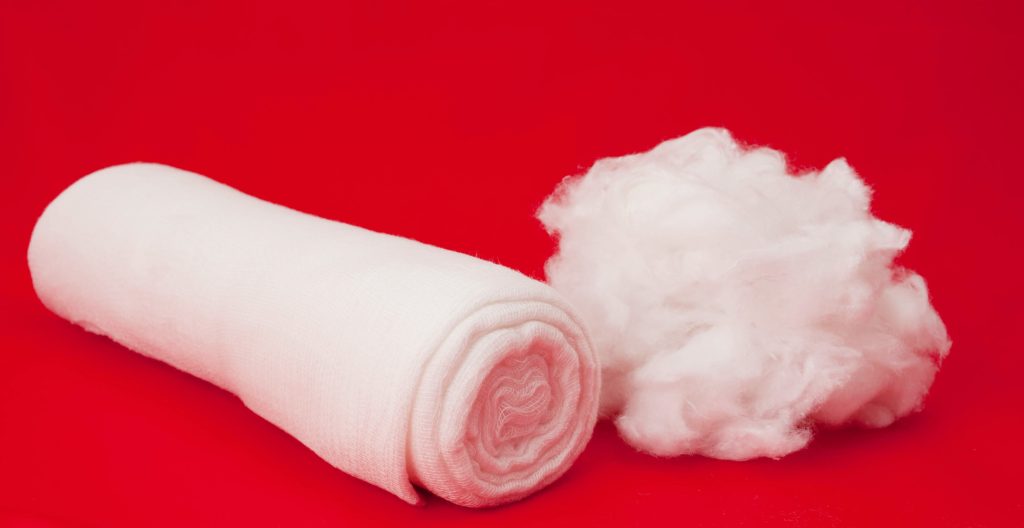
The preparation of the fibers used to make the nonwoven material is the first stage. These fibers can be synthetic (like polyester or polypropylene) or natural (like cotton or wool). Depending on the desired properties of the finished product, they may be found as continuous filaments or as short-staple staple fibers.
Web Formation:
A loose web is then created by carding the fibers. A mechanical procedure called carding straightens and uniformly distributes the fibers. The process of hydroentanglement is initiated by the resulting web.
Hydroentanglement:
A hydroentanglement device is then fed the constructed web. This device is made up of a number of precisely positioned, high-pressure water jets that are placed in a pattern to create the desired nonwoven structure. Single or multi-bar water jets are both possible, with multi-bar systems providing additional design versatility.
Fiber Entanglement and Jet Impact:
The hydroentanglement device’s high-velocity water jets attack the web as it moves through it. These jets’ impact twists the fibers and causes them to interlock with one another. The water jets’ energy spreads throughout the web, tangles the strands in many layers, and strengthens and adheres the nonwoven fabric.
Drying and Dewatering:
The nonwoven material has extra water after hydroentanglement because of the entangling process. Dewatering is the process of removing this extra water using mechanical means like suction. In order to obtain the necessary moisture content, the material is then dried.
Concluding:
To further improve its qualities or add particular functionality, the hydroentangled nonwoven material may go through further finishing procedures after drying, such as calendaring, needling, or coating.
Hydroentangled Nonwoven: Applications
Nonwoven materials are made more advantageous by the hydroentanglement process, which enables them to be used in a variety of applications.
Hygiene products include:
In the production of hygiene products like baby wipes, facial wipes, and feminine hygiene items, hydroentangled nonwovens are frequently employed. The tangled fibers produce a smooth and delicate texture that feels pleasant against the skin.
1. Healthcare textiles:
Hydroentangled nonwovens are used in the medical sector to make surgical gowns, drapes, wound dressings, and other disposable medical items. The entanglement operation improves the materials’ strength and barrier qualities, resulting in greater performance during medical procedures.
2. Filtration Media:
Nonwoven materials are useful for filtration applications due to their entangled nature. Air, water, and other industrial filtration systems all use hydroentangled nonwovens as filter media.
3. Applications for Automobiles:
Hydroentangled nonwoven is utilized in the automobile sector for headliners, flooring, and soundproofing. The process of tangling enhances the material’s longevity and strength.
4. Geotextiles:
Geotextiles used in civil engineering projects for soil stability, drainage systems, and erosion control often contain hydroentangled nonwovens.
The advantages of hydroentanglement nonwovens include:
Compared to conventional bonding methods, the hydroentanglement process has the following advantages:
1. Increased Stability and Strength:
A three-dimensional network formed by the entangled fibers produces a strong, long-lasting nonwoven material that can endure mechanical loads and abrasion.
2. Improved Softness and Texture:
In comparison to conventional bonding techniques, hydroentangled nonwovens feel softer and more fabric-like, making them suitable for a variety of applications.
3. Consistency and Uniformity:
A more even dispersion of fibers is made possible by the water jet entanglement technique, which results in consistent characteristics across the entire nonwoven material.
4. Do Not Use Chemical Binders:
Hydroentanglement doesn’t require the use of adhesives, making the finished product more ecologically friendly and lowering the danger of chemical sensitivities, in contrast to some bonding techniques that involve chemical binders.
Conclusion
The production of nonwoven materials has been revolutionized by the hydroentanglement technique, which provides an adaptable and sustainable solution for numerous industries. Fibers are entangled and interlocked by high-velocity water jets, forming a cohesion with improved strength and softness. This innovative method has found numerous uses in geotextiles, automotive materials, filtering media, hygiene products, and more. The development of nonwoven technology, which opens the door for futuristic innovative and sustainable products, is greatly aided by the hydroentanglement process.
Oceancash is one of the leading biodegradable non woven fabric producers in Malaysia that champions hydroentangled nonwoven. They provide many kinds of useful nonwoven fabric products ranging from healthcare to hygiene sector such as Diapers, Femcare, Surgical Mask, Wet Wipes, and Sheet mask. Check out their products and contact them today.