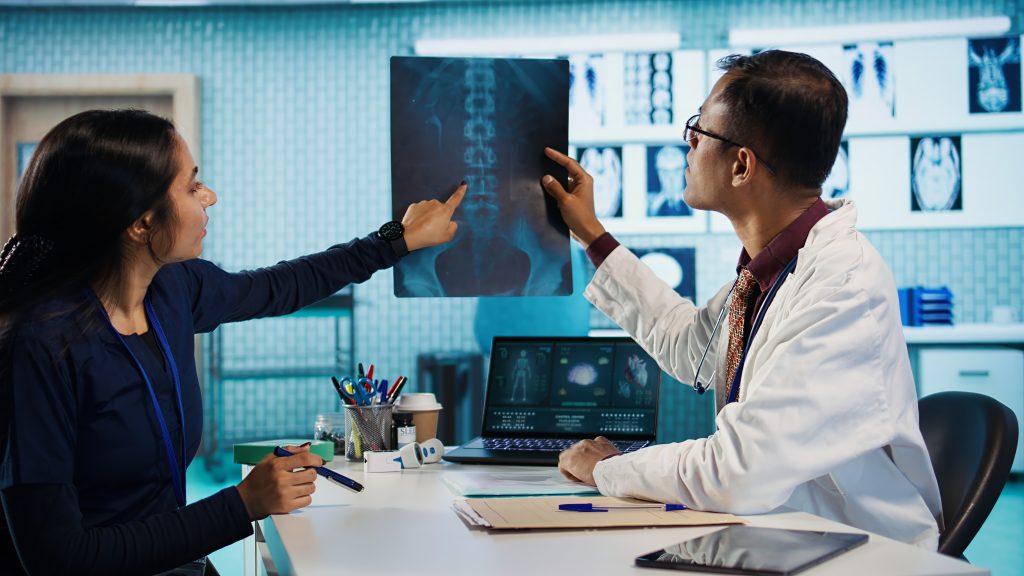
Advanced radiology services are transforming healthcare. They offer cutting-edge imaging technologies that enhance diagnostic accuracy and patient care.
These innovations in medical imaging are reshaping how diseases are detected and treated. From AI integration to 3D imaging, the advancements are remarkable.
AI in radiology is automating image analysis, reducing errors, and speeding up diagnoses. This technology is crucial for improving patient outcomes.
3D imaging provides detailed views of anatomical structures, aiding in precise treatment planning. It is a game-changer in medical imaging.
As we explore these innovations, we see a future where radiology services are more accessible and personalized. The impact on healthcare is profound and promising.
The Evolution of Advanced Radiology Services
Radiology has come a long way since its inception. From simple X-rays to sophisticated techniques, innovation has driven progress.
Advanced imaging technologies have redefined diagnostics. These breakthroughs have improved accuracy and expanded capabilities.
In recent years, several key developments have emerged:
- Enhanced MRI and CT scans
- 3D imaging technology
- Integration of AI in diagnostics
These advancements play a vital role in healthcare. They aid in early disease detection, leading to better patient care.
The journey of radiology continues to evolve. Each innovation offers new potential for improved medical outcomes. Radiology’s future looks bright and promising as technology advances further.
Breakthroughs in Medical Imaging Technology
Medical imaging technology has experienced remarkable advancements in recent years. These breakthroughs have significantly enhanced diagnostic accuracy.
One of the most promising advancements is 3D imaging. It allows for detailed visualization of anatomical structures, aiding in precise treatment planning.
Advanced imaging techniques now incorporate powerful tools, such as:
- Enhanced MRI and CT capabilities
- Improved ultrasound clarity
- Hybrid imaging systems like PET/CT and PET/MRI
The use of contrast agents has also advanced. They enhance visibility, allowing clearer images of blood vessels and tissues.
These innovations extend the use of imaging in critical areas. Oncologists can detect and monitor tumors more effectively. Advanced imaging supports early disease detection, improving patient outcomes dramatically.
Hybrid imaging systems provide comprehensive diagnostic information. They combine different imaging modalities to offer deeper insights into various conditions.
The continuous development in imaging technologies is crucial. It not only facilitates faster diagnostics but also reduces the need for invasive procedures. Radiologists and healthcare providers are now better equipped to address complex medical challenges.
The Role of Artificial Intelligence in Advanced Imaging
Artificial Intelligence (AI) is transforming advanced imaging. It automates image analysis and increases diagnostic accuracy.
AI technology reduces human error. It interprets scans rapidly, providing timely insights for urgent care decisions.
The integration of AI in radiology offers numerous advantages, such as:
- Enhancing image interpretation speed
- Reducing workload for radiologists
- Facilitating early disease detection
AI systems analyze vast datasets, learning patterns that improve over time. This adaptability improves image precision and diagnostic outcomes.
Machine learning algorithms in radiology enhance interpretations, making them more reliable. These algorithms adapt to new data, promoting continuous improvement in imaging services.
AI’s influence extends beyond diagnostics. It supports personalized treatment by tailoring imaging protocols to individual patients. This customization leads to more effective treatment plans and improved patient care experiences.
The adoption of AI in medical imaging is set to grow. It holds great potential to revolutionize how radiologists and healthcare providers manage patient diagnostics and care.
Enhancing Patient Care Through Advanced Imaging Techniques
Advanced imaging techniques play a crucial role in improving patient care. These methods provide clearer, more detailed images for precise diagnoses.
One key benefit is the early detection of diseases. Detecting conditions at an early stage often leads to more successful treatment outcomes.
These cutting-edge technologies facilitate better treatment planning. They offer detailed anatomical views which help clinicians to tailor procedures to individual patient needs.
Some of the advanced imaging techniques include:
- 3D imaging for enhanced anatomical visualization
- Contrast-enhanced scans for better tissue differentiation
- Improved ultrasound for broader diagnostic use
These advancements ensure minimal invasive intervention. They support radiologists in performing precise, image-guided procedures, reducing recovery times for patients.
Moreover, advanced imaging reduces unnecessary exploratory surgery. It provides comprehensive insights, enhancing the doctor-patient communication process, and enriching overall patient care experiences.
Accessibility and Expansion: Portable and Digital Imaging
The expansion of portable imaging devices is revolutionizing healthcare access. These devices bring critical diagnostic services to remote and underserved areas.
Digital imaging further enhances accessibility and efficiency. It eliminates the need for physical film and allows for immediate sharing of images among healthcare providers.
Some key advancements in portable and digital imaging include:
- Enhanced portable ultrasound devices
- Digital X-rays with instant image processing
- Cloud-based image storage solutions
These technologies bridge geographical gaps. They also enable faster decision-making due to immediate image availability, crucial in emergency scenarios.
By improving access to advanced radiology services, portable and digital imaging ensure that patients receive timely and effective diagnosis regardless of location. This accessibility leads to better healthcare outcomes for patients everywhere.
The Future of Radiology: Personalized and Preventive Medicine
Radiology is at the forefront of personalized and preventive healthcare. New imaging innovations enable more precise and tailored diagnostics.
Personalized imaging protocols are evolving to fit individual patient needs. This advancement helps in tailoring treatments effectively and efficiently.
Radiology is also key in preventive medicine, allowing early detection of potential health problems. Imaging techniques can screen for diseases before symptoms appear, improving outcomes.
Future innovations to watch include:
- Development of individualized imaging protocols
- Integration of big data analytics in diagnostics
- Use of radiomics for personalized treatment
These advancements make radiology a critical component in modern medicine. By focusing on both personalization and prevention, radiology will continue to enhance patient care and improve healthcare strategies.
Conclusion: The Impact of Radiology Innovations on Healthcare
The advancements in advanced radiology services are transforming the healthcare landscape. These innovations lead to faster and more accurate diagnoses, ultimately improving patient outcomes.
From AI integration to personalized imaging, the future of radiology is promising. These developments are revolutionizing how we understand and treat disease, underscoring the essential role of radiology in modern medicine. As technology advances, radiology will remain central to providing efficient, effective healthcare solutions worldwide.
Find more about: