What is BIM
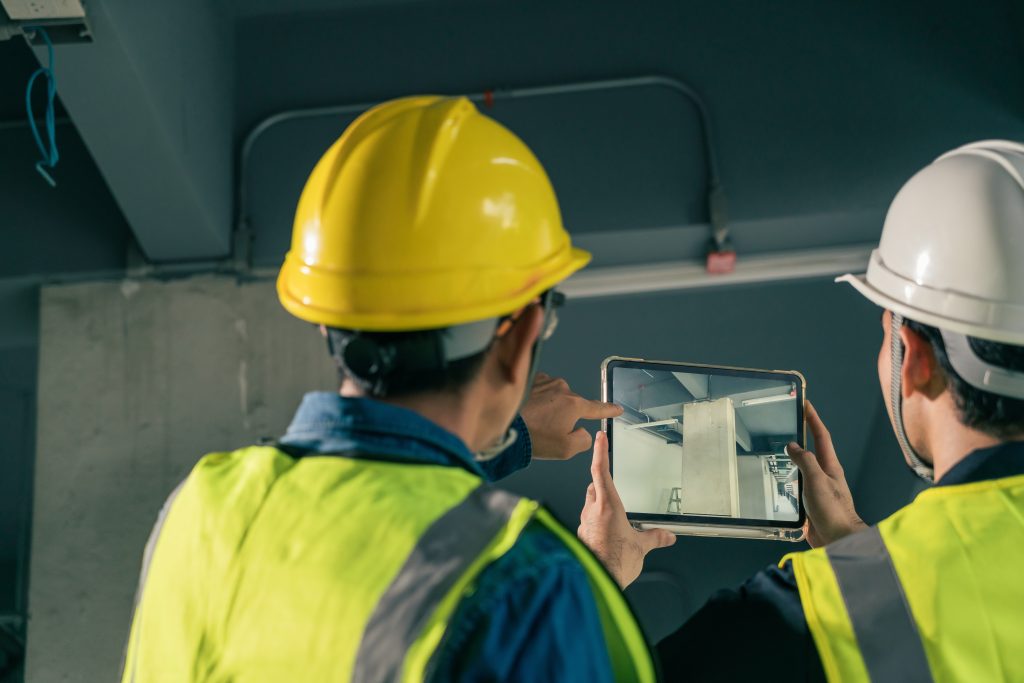
Building Information Modeling or Building Information Management is abbreviated as BIM. It is a highly collaborative process that enables architects, engineers, real estate developers, contractors, manufacturers, and other construction professionals to plan, design, and build a structure or building within a single 3D model.
It can also include building operation and management using data that building or structure owners have access to (hence the Building Information Management). This data enables governments, municipalities, and property managers to make informed decisions based on model information, even after the building is built.
Enhanced collaboration and project planning
Building information modelling is an effective tool for construction project planning and coordination because it helps stakeholders to visualise and discuss the project’s design in a comprehensive and interactive manner. This aids in identifying potential problems and resolving them early in the project, hence lowering the likelihood of errors and delays. BIM also enables real-time collaboration between project teams, thereby enhancing the flow of information and facilitating faster decision-making.
With BIM, construction professionals can establish complete project timelines and budgets, as well as an exhaustive list of required materials and manpower, resulting in more precise and efficient project planning. This improves coordination between different project teams, reduces the danger of redo work, and enhances the overall performance of the project.
Increased precision and output
By providing a digital platform for storing and accessing project information, building information modelling increases accuracy and productivity in the construction sector. BIM software automates time-consuming manual operations, such as dimensioning and quantity take-off, hence minimising the chance of making mistakes and saving time. With BIM, construction professionals can access project information from anywhere and at any time, decreasing their reliance on paper-based processes and accelerating decision-making.
In addition, BIM improves the accuracy of project information by allowing for real-time updates and lowering the chance of data entry errors. This results in more efficient and streamlined building processes, allowing experts to devote more time to higher-value tasks, such as problem-solving and design innovation.
Prefabricated and Modular Building
Prefabrication and modular construction can benefit BIM by enabling better collaboration, increased productivity, and enhanced quality control. Using building information modelling, engineers, architects, and construction staff can exploit prefabrication and modular in three ways:
BIM enables all project stakeholders to access and exchange information in real time, facilitating collaboration and coordination between designers, contractors, and manufacturers.
Prefabrication and modular construction reduce the requirement for on-site construction by producing building components in a factory-controlled environment. BIM can assist in the optimization of these procedures by enabling the creation of virtual mock-ups and simulations to identify potential issues before construction.
BIM can assist in ensuring that prefabricated and modular components are manufactured in accordance with the stated design and performance criteria. This decreases the chance of errors and delays and improves the final product’s quality.
Overall, BIM can facilitate the incorporation of prefabrication and modular construction into the construction process, thereby decreasing the time, expense, and waste associated with conventional construction techniques.
Improved Decision-Making
Building information modelling provides a realistic and comprehensive view of the building project, allowing stakeholders to make informed decisions based on precise data. With BIM, construction professionals have access to a single source of truth, which reduces the chance of miscommunication and ensures that everyone is working with the same data.
Additionally, BIM provides extensive simulations of the construction process, enabling stakeholders to evaluate various scenarios and evaluate the impact of prospective changes. This results in improved decision making and enhanced project outcomes. BIM also helps to detect potential risks and problems early in the project, enabling proactive problem-solving and decreasing the risk of project delays. BIM enables stakeholders to make better informed and effective decisions, resulting in enhanced project performance and outcomes, by offering a clear and comprehensive image of the construction project.
Increased durability
Building information modelling is a valuable instrument for incorporating sustainability and environmental factors into the design and construction process. The BIM programme enables thorough simulations and analyses of the construction project, enabling stakeholders to examine the effects of various design options on the environment and energy usage. This results in the establishment of more ecologically friendly and sustainable construction projects.
Using BIM, construction professionals may evaluate the energy efficiency of buildings and discover opportunities for energy-saving improvements, such as better insulation and more efficient lighting systems. BIM also reduces waste by facilitating precise material ordering and avoiding rework, resulting in a more effective use of resources. BIM enables stakeholders to make educated decisions about sustainability and the environment by offering a full perspective of the construction project, resulting in more sustainable and environmentally friendly construction projects.
For those who are really interested in Building Information Modelling, fret not as smart.cidb provides comprehensive training courses for BIM Malaysia. Access smart.cidb resources such as BIM Proficiency Training, myBIM Library, myBIM Facilities, the BIM Resource Network, and NBeS.