What Is an Ex Hazardous Area and Why Does Explosion Protection Matter?
An Ex hazardous area — formally defined as an explosive atmosphere — is any location where flammable gases, vapours, mists, or combustible dusts may be present in sufficient concentration to cause an explosion if ignited by an electrical spark, hot surface, or electrostatic discharge.
In Malaysia’s oil and gas sector, hazardous areas are found throughout production platforms, refineries, petrochemical complexes, LNG terminals, and fuel handling facilities. The consequences of an ignition event in a classified hazardous area can be catastrophic: the Piper Alpha disaster (1988), which killed 167 people, and the Texas City refinery explosion (2005), which killed 15 and injured 180, both involved failures of explosion protection management systems.
The engineering response to hazardous area risk is explosion protection — a systematic approach to ensuring that all electrical equipment installed in classified zones is specifically certified for the ignition risks present, properly installed and maintained, and regularly inspected to verify continued compliance.
Hazardous Area Zone Classification Under IEC 60079-10
Gas/Vapour Zone Classification
- Zone 0: An area in which a flammable atmosphere is present continuously or for long periods. Only the highest certification category Ex equipment is permitted.
- Zone 1: An area where a flammable atmosphere is likely to occur in normal operation. Ex-certified equipment to Category 2G standard required.
- Zone 2: An area where a flammable atmosphere is not likely to occur in normal operation but may occur occasionally. Category 3G equipment permitted
.
Dust Zone Classification
- Zone 20: Combustible dust present continuously or for long periods — the dust equivalent of Zone 0
- Zone 21: Combustible dust likely in normal operation — equivalent to Zone 1
- Zone 22: Combustible dust not normally present but may occur occasionally — equivalent to Zone 2
IEC 60079-17: The Standard Governing Ex Equipment Inspection
IEC 60079-17 is the international standard specifying the requirements for inspection and maintenance of Ex electrical installations. It defines three inspection categories that must be applied at appropriate frequencies based on equipment criticality and environment:
- Visual inspection: external examination without opening equipment enclosures. Checks for obvious damage, corrosion, missing fasteners, and enclosure integrity. Can be performed during normal operations and should be conducted most frequently — typically quarterly to annually.
- Close inspection: includes visual inspection plus checks requiring closer access, such as verification of cable entry integrity, gland and conduct security, and luminaire mounting. Performed annually in most operational environments.
- Detailed inspection: the most comprehensive category, involving opening of equipment enclosures, inspection of internal components, and verification of all certification-relevant features. Performed on a risk-assessed cycle, typically every 1–3 years for critical equipment.
EXS Synergy’s Ex Hazardous Area Services
Ex Engineering, Procurement & Installation
EXS Synergy manages the complete EPC (Engineering, Procurement, Construction) lifecycle for Ex equipment — from specifying equipment to Zone classification and process conditions, procuring IECEx or ATEX certified equipment from approved manufacturers, and installing and commissioning the final system with full documentation. Deliverables include datasheets, design documentation, area classification drawings, and commissioning reports — providing asset owners with a complete and audit-ready project record.
IECEx 03-4 Certified Inspection Service
EXS Synergy is an IECEx Certified Service Facility under the IECEx 03-4 scheme — an internationally recognised certification that verifies the organisation’s quality management system, technical procedures, and personnel competence against the most rigorous standard for Ex inspection service provision. This certification, held by EXS Synergy as the first company globally to receive it, provides a level of assurance to asset owners that no uncertified provider can match.
Inspection outputs include structured non-conformance reports, recommended remediation actions, updated Ex registers, and compliance status documentation suitable for submission to PETRONAS, insurers, and internal governance bodies.
intellEx — Digital Ex Asset Compliance Management
intellEx is EXS Synergy’s award-winning digital platform for managing Ex asset compliance across the facility lifecycle. Rather than relying on paper-based inspection records and spreadsheet registers, intellEx provides a centralised dashboard that tracks every Ex asset’s inspection status, certification validity, non-conformance history, and remediation status in real time.
For asset owners managing hundreds or thousands of Ex items across multiple facilities, intellEx transforms compliance from a reactive, record-keeping exercise into a proactive, risk-based programme — enabling prioritised maintenance scheduling, audit-ready documentation at any time, and clear management visibility of compliance status across the portfolio.
IECEx CoPC Training
The IECEx Certificate of Personnel Competence (CoPC) is the international standard for qualifying individuals who work on Ex equipment. EXS Synergy delivers IECEx CoPC training programmes covering Ex equipment installation, inspection, and maintenance — equipping client teams with the competence to perform close and visual inspections in-house between EXS Synergy’s periodic detailed inspections.
Key FAQs: Hazardous Area Compliance in Malaysia
1. Does PETRONAS require IECEx certification for Ex service providers?
PETRONAS technical standards align with international best practice, and IECEx certification of both service facilities and personnel competence is increasingly required or strongly preferred in PETRONAS project specifications and vendor qualification processes. EXS Synergy’s IECEx 03-4 certification directly satisfies this requirement.
2. What is the difference between ATEX and IECEx?
ATEX is the European Union’s directive governing Ex equipment and installation, based on European CENELEC standards. IECEx is the international (IEC) equivalent scheme, which Malaysia and PETRONAS align with. Equipment certified under both schemes is broadly equivalent in safety standard, but IECEx certification from an accredited certification body is the relevant standard for Malaysian oil and gas applications.
3. Do you provide services for offshore platforms?
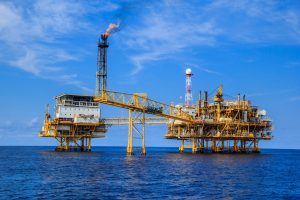
Yes. EXS Synergy has extensive offshore experience across fixed platforms, FPSOs, and FSOs, including work for major Southeast Asian operators. Offshore Ex inspection requires specific competencies around marine environment corrosion, ATEX/IECEx documentation management for offshore installations, and coordination with platform operations schedules.
Final Word
For asset owners and operators in Malaysia’s oil, gas, and petrochemical sector, explosion protection compliance is not merely a regulatory obligation — it is the engineering foundation of safe operation. EXS Synergy’s IECEx-certified competence, PETRONAS-licensed status, and digital intellEx platform provide a complete, audit-ready hazardous area compliance capability that no other provider in Malaysia matches.